
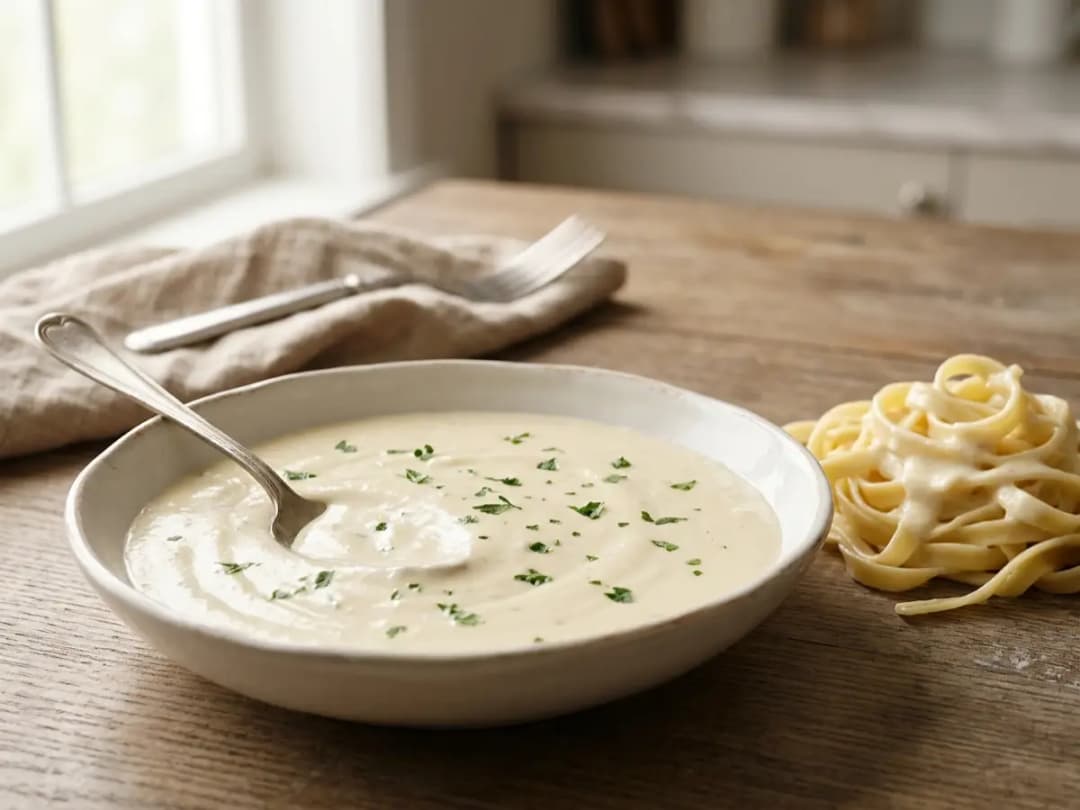
What Makes This Alfredo Sauce Creamy?
The texture comes from gently heating butter and heavy cream before adding Parmesan. As the cheese melts into the warm mixture, it gives the sauce body and a rich, savory flavor.
Garlic adds a mild savory note, while fresh parsley brings a fresh finish. The method is simple, but keeping the heat low helps the cheese blend into the sauce without becoming grainy.
Choosing Parmesan for Alfredo Sauce
Freshly grated Parmesan is a good choice for this sauce. Finely grated cheese blends more easily into warm cream than large pieces, helping the sauce develop a smoother consistency.
Add the Parmesan while whisking continuously. Keep the saucepan over low heat and avoid letting the mixture boil vigorously. Excessive heat can make cheese sauces grainy or cause them to separate.
Gruyère is another option if you want a different cheese flavor. It melts differently from Parmesan, so expect the finished sauce to taste different.
How to Adjust the Sauce Consistency
This Alfredo sauce should be thick enough to coat pasta without additional thickening. If you prefer a thicker consistency, gradually whisk in a little more finely grated Parmesan.
Add the cheese in small amounts and give it time to melt before adding more. Too much cheese at once can make the sauce overly thick.
If the sauce becomes too thick while it sits, gently warming it while whisking can help loosen it. Keep the heat low rather than trying to thin it quickly over high heat.
What to Serve with Alfredo Sauce
Fettuccine is a classic way to serve Alfredo sauce because its wide strands hold the creamy coating. You can also use it with other pasta shapes, roasted chicken, or steamed vegetables.
For another creamy pasta idea with a brighter flavor, try our Lemon Cream Sauce for Pasta. You can also browse our Pasta Recipes collection for more dinner ideas.
The sauce is also useful as a creamy base for pizza. Spread a thin layer over pizza dough before adding the toppings.
Storing and Freezing Alfredo Sauce
Let leftover sauce cool, then transfer it to a covered, airtight container. Refrigerate it promptly and use it within 3 to 4 days.
Refrigerate perishable leftovers within two hours. Use shallow containers to help them cool more quickly, and keep your refrigerator at 40°F or below. Follow FoodSafety.gov's food storage and chilling guidance when handling leftovers.
You can freeze Alfredo sauce in freezer-safe containers for up to three months for best quality. Thaw it overnight in the refrigerator. The texture may separate after freezing, so warm it gently while whisking before serving. The sauce is best freshly made if you want the smoothest consistency.
Alfredo Sauce Recipe FAQs
How Can I Make Alfredo Sauce Thicker?
Whisk in additional finely grated Parmesan a little at a time. Allow each addition to melt before adding more so you can control the consistency.
Can I Use Gruyère Instead of Parmesan?
Yes. Gruyère can replace Parmesan, but it gives the sauce a different flavor. Add it gradually while whisking over low heat.
Can I Make Alfredo Sauce Ahead of Time?
You can prepare it ahead and refrigerate it, but the sauce may thicken as it cools. Reheat it gently over low heat while whisking before serving.
Can I Freeze Homemade Alfredo Sauce?
Yes, although the texture may change after thawing. Freeze it for up to three months for best quality, thaw it in the refrigerator, and reheat it gently.