
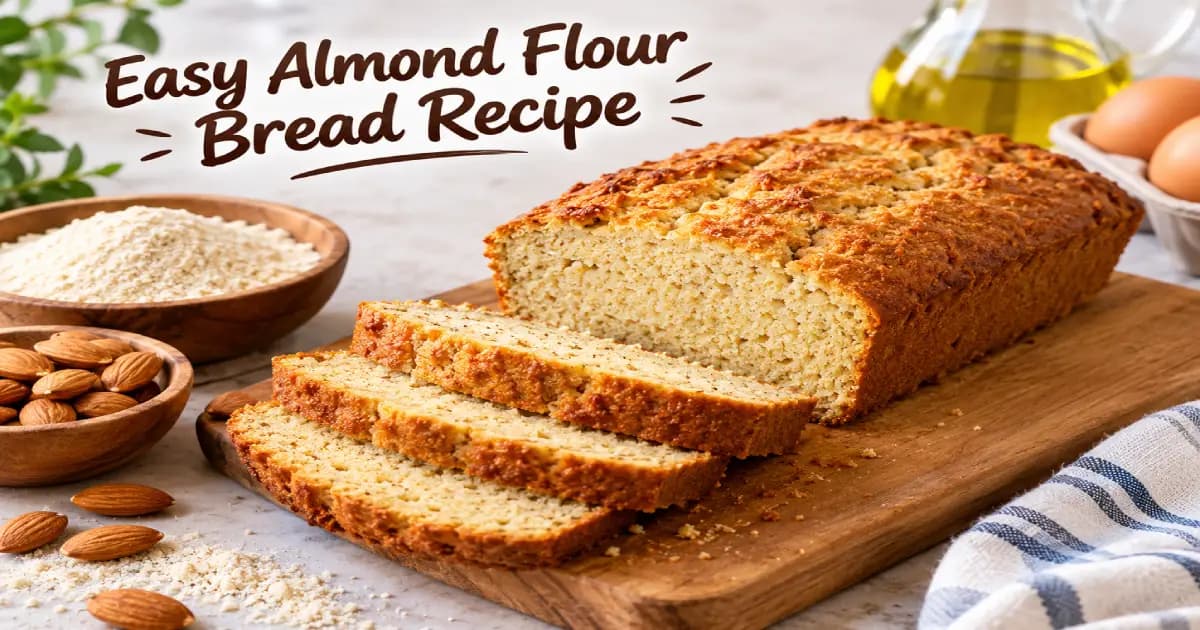
If you're looking for a simple homemade bread without wheat flour, this almond flour bread is a useful recipe to keep on hand. It has a tender, slightly delicate crumb and a mild flavor that works with both sweet and savory toppings.
Made with almond flour, eggs, butter, and a few basic baking ingredients, this loaf comes together without yeast or kneading. It is a quick bread, so the preparation is straightforward and there is no need to wait for dough to rise.
Why You'll Love This Almond Flour Bread
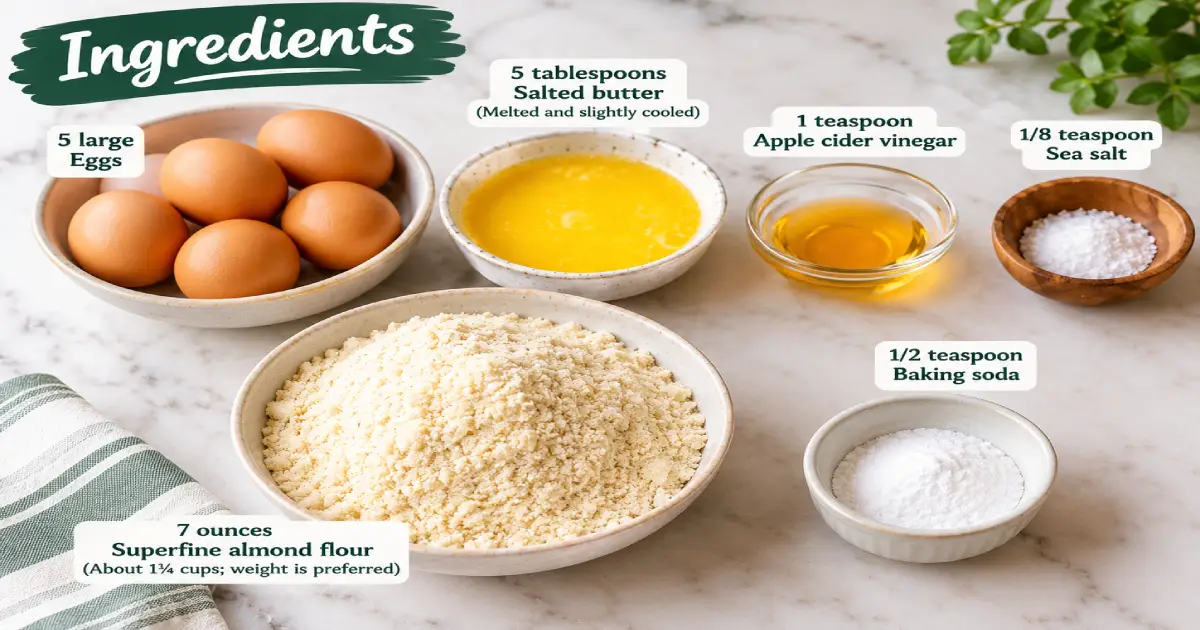
Simple ingredients: The recipe uses a short list of everyday baking staples.
Gluten-free: Almond flour replaces traditional wheat flour.
Versatile flavor: Serve it with butter, nut butter, eggs, or your favorite sandwich fillings.
Easy preparation: Mix the batter, transfer it to a loaf pan, and bake.
Make-ahead friendly: The cooled loaf can be sliced and stored for later.
What to Expect From Almond Flour Bread
Almond flour behaves differently from wheat flour because it does not contain gluten. The finished bread is more tender and less stretchy than a traditional sandwich loaf. Allowing it to cool before slicing helps the crumb settle and makes the slices easier to handle.
For the best texture, use finely ground, superfine almond flour and measure it carefully. Almond meal can work, but the loaf may have a coarser texture.
Tips for Better Results
Use the right pan. An 8-inch loaf pan is the intended size for this recipe. A larger pan may produce a shorter loaf, and baking time can vary.
Prepare the pan well. Grease the pan and line it with parchment paper, leaving enough overhang to lift the bread out easily.
Work promptly after adding the baking soda. The baking soda reacts with the apple cider vinegar, so transfer the batter to the pan and bake it without unnecessary delay.
Check for doneness. The loaf should look set, and a toothpick inserted into the center should come out clean. If the center is still wet, give it a little more time and check again.
Cool before slicing. Let the bread cool so its structure can settle. Slicing while it is very hot may cause it to crumble.
Easy Ways to Customize It
For a savory loaf, try adding dried herbs such as oregano or thyme. A little garlic powder can also complement savory toppings.
For a sweeter variation, add a suitable sweetener and a little cinnamon or vanilla. Keep in mind that additions and substitutions can change the final texture, so make small adjustments when experimenting.
If you'd prefer a slightly chewier crumb, a small amount of psyllium husk powder may help. It absorbs liquid, so the recipe may need extra water and a short resting period.
How to Serve Almond Flour Bread
Serve a slice warm with butter, or toast it and add your favorite topping. It also works well alongside eggs at breakfast, with soup at lunch, or as the base for a simple sandwich. Since the loaf is tender, handle thin slices gently.
Storage and Freezing
Allow the loaf to cool completely before storing it. Keep it in an airtight container or resealable bag in the refrigerator for up to five days.
For longer storage, slice the cooled loaf and freeze the slices in a freezer-safe bag. Separate slices as needed and toast or gently reheat them before serving.
Frequently Asked Questions
Does almond flour bread taste like regular bread?
Not exactly. It has a mild flavor, but its texture is more tender and less elastic than traditional wheat bread because it does not contain gluten.
Can I use almond meal instead of superfine almond flour?
Almond meal can work, but the texture is usually coarser. If the batter looks unusually dry, a small amount of additional water may help.
Why should the bread cool before slicing?
Cooling helps the crumb settle and makes the loaf easier to slice without breaking apart.
Can I freeze almond flour bread?
Yes. Cool the loaf completely, slice it, and freeze the slices in a sealed freezer-safe bag. Toast or reheat slices when ready to eat.
Is this bread made with yeast?
No. This is a quick bread that uses baking soda rather than yeast, so it does not require proofing or kneading.
Final Tip
For neat slices and the best texture, let the loaf cool before cutting it. Start with the recommended pan and ingredients, then experiment with herbs or toppings once you've tried the basic recipe.