Easy Bread and Butter Pudding
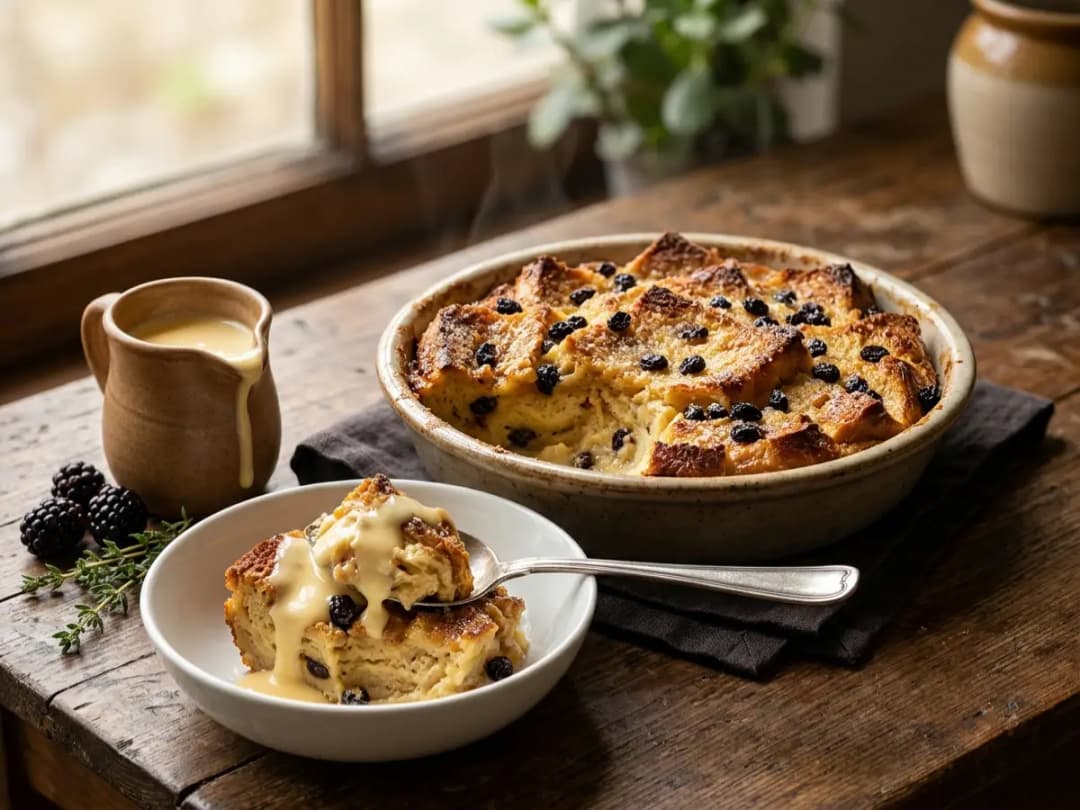
Bread and butter pudding has a golden top and a soft, custard-like center, making it a comforting way to use leftover bread. The slices absorb a simple milk and egg mixture as the pudding bakes, while dried fruit adds sweetness between the layers.
This recipe makes six servings and takes about 30 to 40 minutes to bake. You can serve it warm on its own or add custard, whipped cream, or vanilla ice cream.
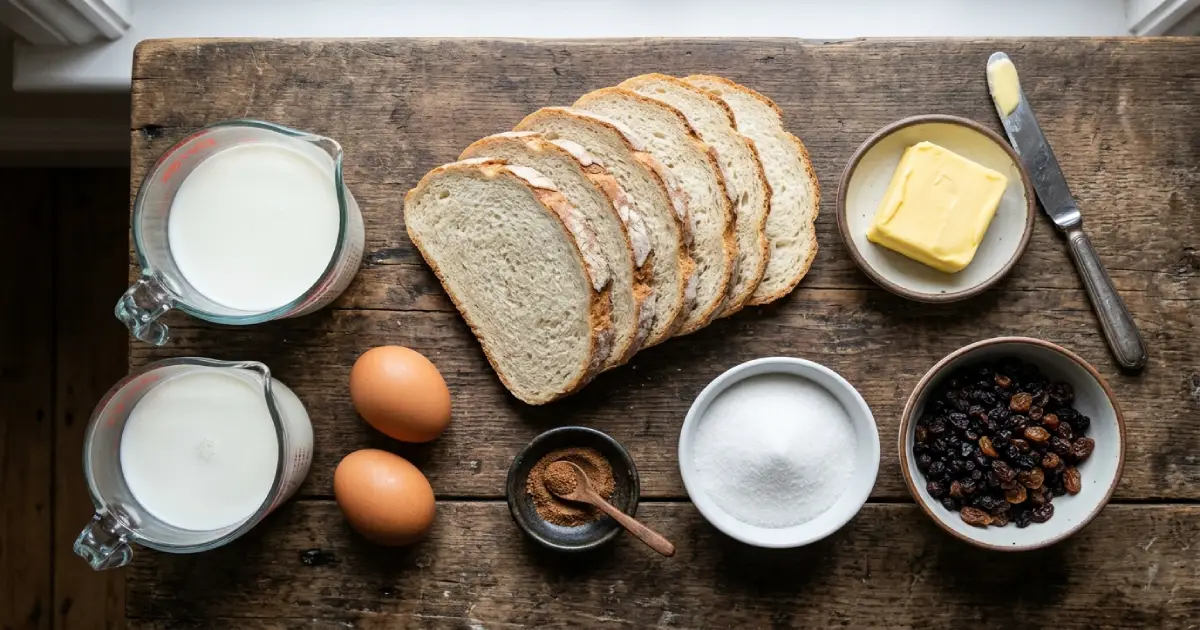
Why Use Stale Bread?
Stale bread works particularly well in bread and butter pudding because it absorbs the milk and egg mixture without becoming soggy as quickly as fresh bread.
If your bread is still fresh, let the slices dry slightly before assembling the pudding. This helps them absorb the custard mixture while holding their shape.
Choosing the Dried Fruit
Dried currants and raisins both work well in this pudding. They add sweetness throughout the layers without changing the basic preparation.
You can also replace them with chopped dried apricots, dates, or prunes. These alternatives give the pudding a different flavor while keeping the same general method.
Tips for Making Better Bread and Butter Pudding
Use stale bread so it can absorb the milk mixture without becoming too soft.
Spread the softened butter evenly over both sides of each slice.
Cut the bread into triangles to make layering easier.
Distribute the sugar and dried fruit evenly between the layers.
Gently press the bread down after adding the milk and egg mixture to help it absorb the liquid.
Check the center before removing the pudding from the oven. It should be set, not liquid.
Let the pudding rest briefly before serving.
A stainless steel mixing bowl gives you room to combine the milk and egg mixture comfortably. A measuring cups and spoons set can help you measure the ingredients consistently.
How to Know When It's Ready
The pudding is ready when the top is golden brown and the center is set. The middle should no longer look liquid.
Bake at 350°F (175°C) for 30 to 40 minutes. Start checking toward the beginning of the baking range because ovens and baking dishes can vary.
What to Serve with Bread and Butter Pudding
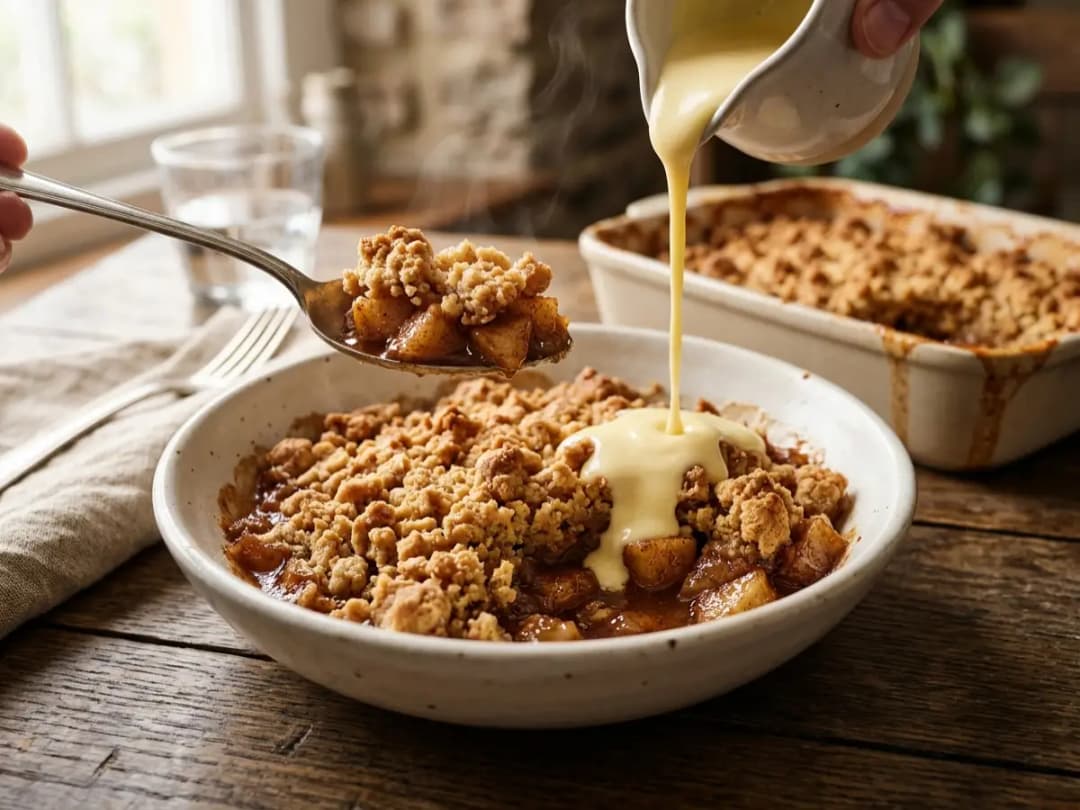
Serve bread and butter pudding warm, either on its own or with a topping. These options complement its soft, custard-like texture:
Custard sauce for a classic pairing.
Softly whipped cream for a creamy topping.
Vanilla ice cream for a contrast with the warm pudding.
Easy Variations
Use Different Dried Fruits
Replace the currants or raisins with chopped dried apricots, dates, or prunes. Keep the pieces small so they're easy to distribute between the bread layers.
Add Cinnamon Sugar
Sprinkle cinnamon sugar over the bread for extra spice. This is an optional variation if you want a warmer flavor.
Try Different Bread Options
Stale bread is the recommended choice, but different types of bread can produce slightly different textures. Check the pudding as it bakes and use the golden top and set center as your main indicators.
Frequently Asked Questions
Can I Use Fresh Bread Instead of Stale Bread?
Yes, but stale bread is recommended because it absorbs the milk mixture without becoming soggy as quickly. Fresh bread may soften more during preparation and baking.
Can I Use Raisins Instead of Currants?
Yes. Raisins and dried currants are both suitable for this pudding. Use either one based on your preference.
What Temperature Should Bread and Butter Pudding Bake At?
Bake the pudding at 350°F (175°C). Check that the top is golden brown and the center is set before removing it from the oven.
How Long Does Bread and Butter Pudding Take to Bake?
Allow 30 to 40 minutes at 350°F (175°C). Baking time can vary depending on your oven and baking dish, so check the center before serving.
What Can I Serve with Bread and Butter Pudding?
Custard sauce, softly whipped cream, and vanilla ice cream are all suitable accompaniments. Serve the pudding warm.
Can I Use Other Dried Fruits?
Yes. Chopped dried apricots, dates, and prunes can replace the currants or raisins.