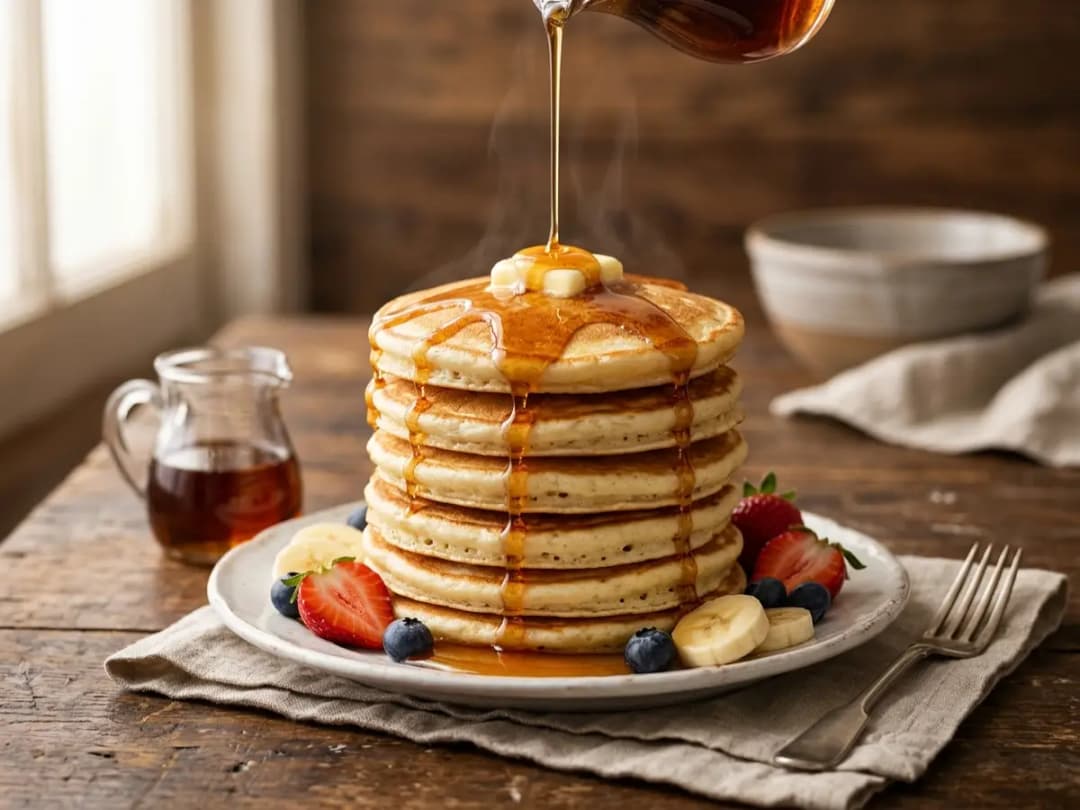
What Makes This American Pancake Recipe Fluffy?
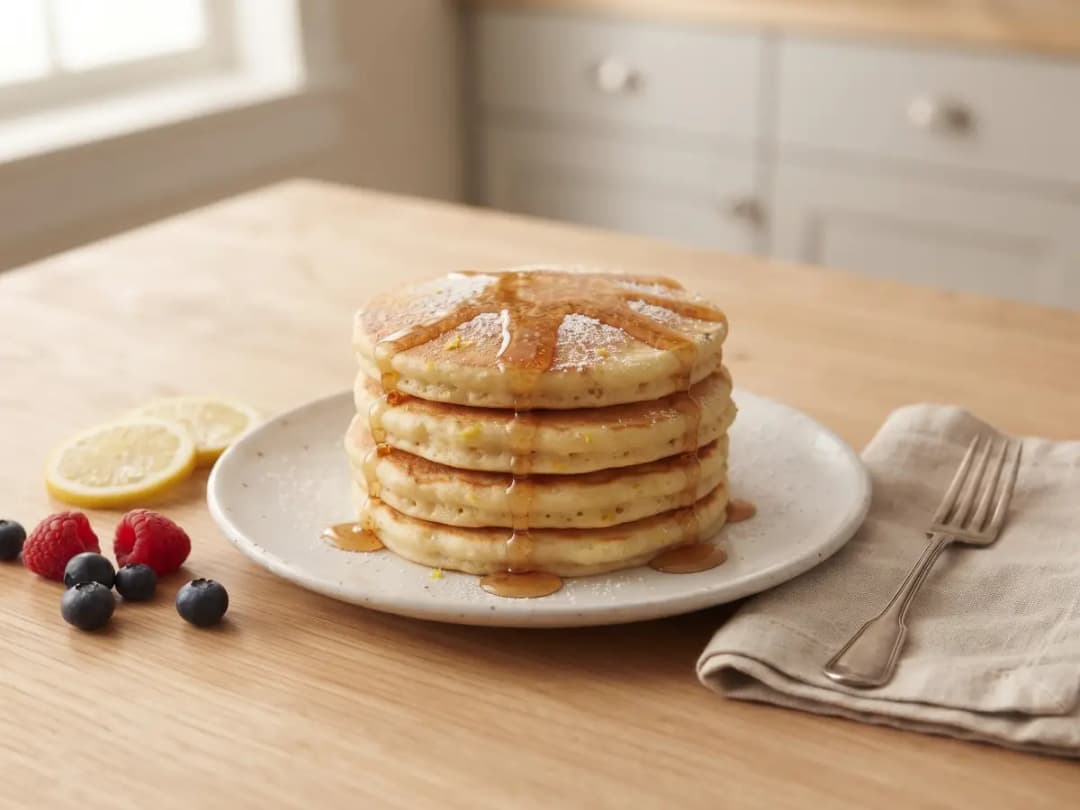
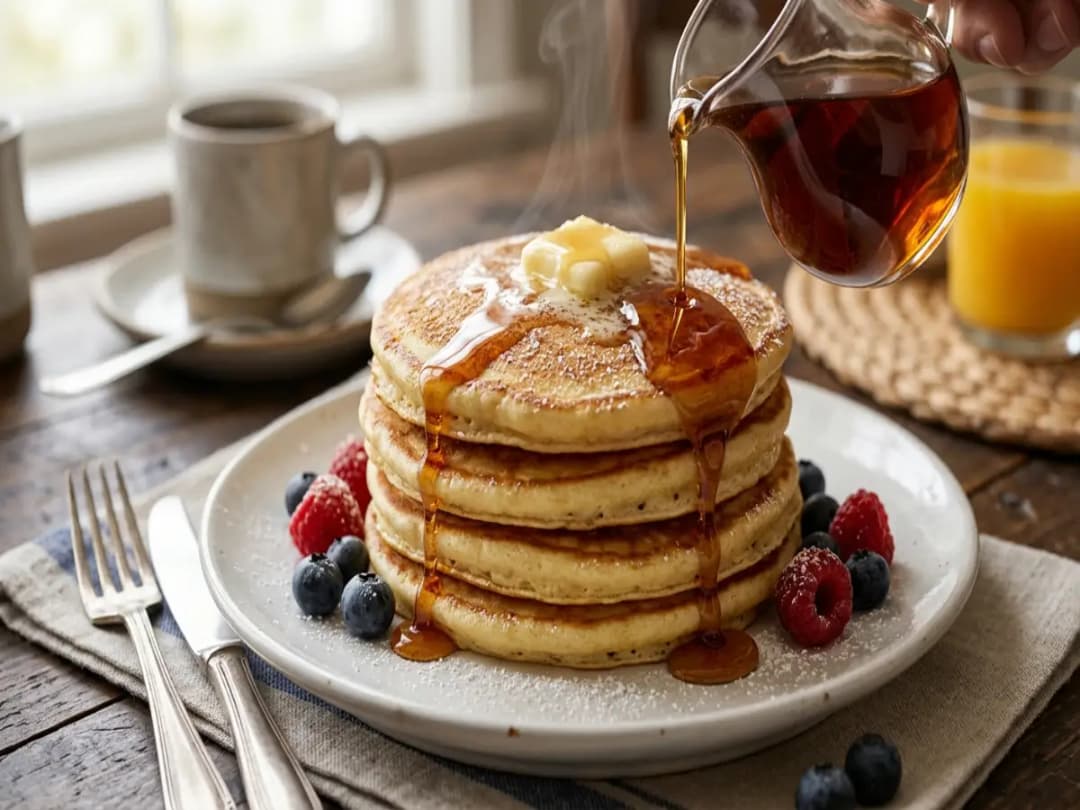
American pancakes have soft, fluffy centers and lightly golden surfaces. This American pancake recipe uses baking powder to help the batter rise, while gentle mixing keeps the pancakes tender.
Once the wet and dry ingredients are combined, stir just until the flour is incorporated. A few small lumps are fine. Overmixing develops more gluten in the flour, which can make pancakes dense and chewy.
Let the batter rest for a minute or two before cooking. For more detail, read King Arthur Baking's guide to avoiding a common pancake mixing mistake.
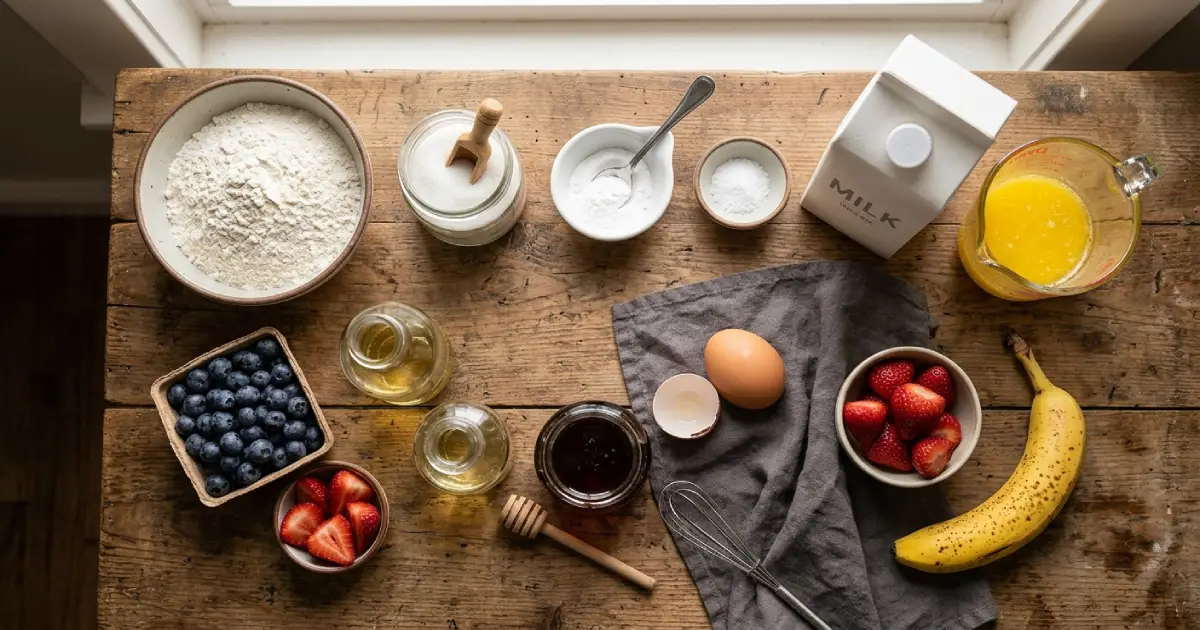
Important Ingredients
All-purpose flour: Flour provides the structure for the pancakes. Measure it carefully to keep the batter consistent.
Baking powder: This leavening agent helps the pancakes rise. Check that it's fresh, since old baking powder may not work as effectively.
Milk: Whole milk or 2% milk works well. You can also use non-dairy milk as an alternative.
Melted butter: Butter adds richness to the batter. You can replace it with a neutral vegetable oil, such as canola or sunflower oil.
Egg: The egg contributes moisture and tenderness. Bringing it to room temperature before mixing helps it combine more easily with the other ingredients.
Tips for Light and Fluffy Pancakes
Don't overmix: Stir the wet and dry ingredients just until combined. Small lumps are fine.
Check your baking powder: Make sure it's fresh and active so the batter can rise properly.
Use moderate heat: Cook over medium or medium-low heat so the outside doesn't brown too quickly before the center cooks.
Watch for bubbles: Bubbles forming and popping on the surface are a useful sign that the first side is ready to flip.
Flip carefully: Slide a thin spatula underneath the pancake and turn it over gently.
Lightly grease the cooking surface: Coat the skillet or griddle between batches to help prevent sticking.
Ingredient Substitutions
Butter or vegetable oil: Replace the melted butter with a neutral vegetable oil, such as canola or sunflower oil.
Non-dairy milk: Almond milk or oat milk can replace regular milk. The flavor and texture may vary slightly.
Whole wheat flour: You can replace the all-purpose flour with whole wheat flour in a 1:1 ratio. Expect a denser texture than pancakes made with all-purpose flour.
Buttermilk: Use buttermilk instead of regular milk for a more tender pancake. The batter's consistency and flavor may change.
Topping Ideas
Maple syrup and butter are classic toppings for American pancakes. Fresh strawberries, blueberries, raspberries, and sliced bananas also work well.
For a richer topping, try chocolate chips, peanut butter, almond butter, or chopped nuts. You can also add fruit or chocolate chips to the pancakes while they cook.
How to Keep Pancakes Warm
When cooking several batches, preheat the oven to 200°F and place a heatproof platter inside. Transfer the cooked pancakes to the platter and cover them with foil while you finish cooking the remaining batter.
How to Store and Reheat Leftover Pancakes
Let leftover pancakes cool before placing them in a sealed container in the refrigerator. Keep them refrigerated for two to three days.
To freeze pancakes, arrange them in a single layer on a parchment-lined baking sheet. Once frozen, transfer them to a freezer-safe bag. You can also place parchment paper between stacked pancakes to help prevent sticking.
Reheat refrigerated or frozen pancakes in a toaster or microwave. In the microwave, start with 30 seconds to one minute and adjust the time as needed.
For additional food-storage guidance, consult the FoodSafety.gov cold food storage chart.
Frequently Asked Questions
Why Are My American Pancakes Not Fluffy?
Overmixing can make pancakes dense and chewy. Stir the batter only until the wet and dry ingredients are combined. Also, check that your baking powder is fresh and active.
Should Pancake Batter Be Completely Smooth?
No. A few small lumps are fine. Mixing until the batter is completely smooth can develop too much gluten and make the pancakes tougher.
When Should I Flip Pancakes?
Look for bubbles forming and popping on the surface. When the edges begin to look set, slide a thin spatula underneath and flip the pancake.
Can I Freeze Homemade Pancakes?
Yes. Freeze the pancakes in a single layer first, then transfer them to a freezer-safe bag. Place parchment paper between stacked pancakes if you prefer to freeze them together.