
Why You’ll Love This Chili
Ready in about 40 minutes: A short simmer gives you a flavorful chili that works well for busy weeknights.
Even better with extra time: Letting it simmer gently for longer helps the beef become more tender and gives the sauce a richer flavor.
Made with pantry spices: You don’t need a special chili seasoning packet to make a delicious pot of chili.
Great for meal prep or sharing: The flavors develop as it sits, so leftovers are just as satisfying the next day. It also freezes well.
Easy to serve your way: Enjoy it over rice, scoop it up with corn chips, or finish it with your favorite toppings.
What Is Chilli Con Carne?
Chilli con carne is a hearty dish made with beef, beans, tomatoes, and spices. It’s usually called chili in the United States and Canada, while chilli con carne is more common in the UK and Australia.
This version is the kind of comforting, home-style chili many people know and love. Ground beef, kidney beans, and tomatoes simmer together in a savory sauce seasoned with everyday spices. The cooking method is somewhat similar to making Bolognese sauce, but the beans and chili spices give this dish its own distinctive flavor.
Traditional Texas chili is different. It typically uses chunks of beef instead of ground beef and often leaves out both beans and canned tomatoes. Dried chiles are usually an important part of its flavor. This recipe takes a more practical, family-friendly approach, using familiar ingredients you can easily keep in your pantry.
Why This Recipe Works
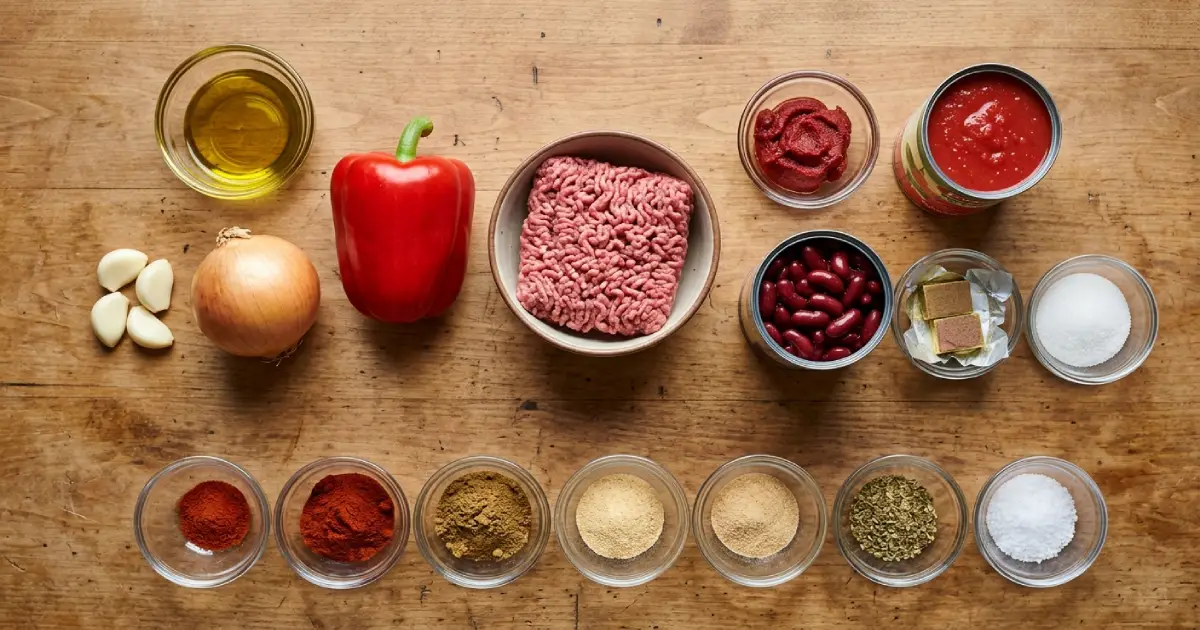
Cooking the spices with the beef builds flavor. Stirring the spices into the browned meat before adding the liquids helps release their aromas and gives the chili a deeper taste.
A balanced spice mix makes the flavor easier to control. Chili powder varies from brand to brand, so adding cumin, paprika, cayenne, and a few other pantry spices lets you adjust the seasoning to your liking. A measuring spoons set also helps you keep the proportions consistent.
Bouillon cubes add savory depth. They give the sauce a fuller, meatier flavor than salt alone.
Ingredient Notes and Substitutions
The Beef and Beans
Ground beef gives this chili its hearty base. Red kidney beans are a classic choice, but you can use another variety if that’s what you have on hand. If you’re using canned beans, drain them before adding them to the pot so you don’t introduce extra liquid.
The Spices and Heat
Cayenne pepper is what gives this chili its extra kick. Use less if you prefer a milder flavor, or add a little more if you like your chili spicy. If you’re unsure how much heat you want, start with a smaller amount and adjust toward the end, once the flavors have had time to develop.
The Bouillon Cubes
Crumbled beef bouillon cubes add savory flavor as they dissolve into the sauce. If you’d rather use broth, replace the water and bouillon cubes with about 3 cups of regular beef broth. Since broth and bouillon can both contain plenty of sodium, let the chili simmer until the sauce has reduced, then taste it before adding extra salt.
Garlic and Onion Powders
Both garlic powder and onion powder are part of the spice mix. If you’re missing one, you can still make the chili. The flavor may be a little different, but the dish should still be enjoyable.
Tips for the Best Chili
Brown the beef well. Let the meat brown rather than simply turning gray as it cooks. For food safety, ground beef should reach an internal temperature of 160°F.
Cook the spices before adding the liquid. Stirring them into the browned beef helps bring out their flavor and gives the finished chili more depth.
Choose the simmering time that suits your schedule. Simmering uncovered over medium-low heat for 20 to 40 minutes works well for a weeknight meal. If you have 1½ to 2 hours, a very gentle, covered simmer gives the flavors more time to develop and can help the beef become more tender.
Taste before adding salt. Bouillon cubes and canned ingredients may already contain plenty of sodium, so it’s best to adjust the seasoning near the end.
Try the slow cooker. You can adapt this recipe using a programmable slow cooker. Follow the recipe through the simmering stage, using only ¼ cup of water, then transfer the mixture to the slow cooker. Cook on low for about 6 hours. Depending on your slow cooker, cooking for up to 8 hours may also work.
How to Tell It’s Done
The chili is ready when the beef is fully cooked, the sauce has thickened, and everything is simmering gently. It should be rich and saucy rather than watery. If you have extra time, letting it cook a little longer can deepen the flavor. Before serving, taste it and adjust the salt and cayenne pepper as needed.
What to Serve with Chilli Con Carne
There are plenty of ways to serve chilli con carne, whether you want a simple weeknight dinner or a more filling meal.
With corn chips or warm tortillas: These are great for scooping up the chili.
Over rice: A straightforward option that makes the meal more filling.
With cornbread: Its slightly sweet flavor pairs nicely with the savory chili.
Over baked potatoes: Follow our guide to baking potatoes in the oven, then spoon the chili over the top.
As a topping: Try it over pasta, on chili fries, or on hot dogs.
Sour cream or plain yogurt and grated cheese are classic toppings. You can also add fresh cilantro, sliced green onions, diced red onion, avocado, pico de gallo, or sliced jalapeños.
For more Tex-Mex-inspired ideas, serve the chili with corn chips and our queso dip, or pair it with our Chipotle burrito recipe. If you’re looking for more comforting meals, explore our dinner recipes or try this vegetable beef soup.
Make-Ahead, Storage, and Reheating
Make ahead: Chili often tastes even better the next day because the flavors have more time to blend. Prepare it ahead if you want an easy meal for a busy day.
Refrigerator: Let the leftovers cool, then transfer them to airtight food storage containers. Refrigerate within 2 hours and eat within 3 to 4 days.
Freezer: Chili freezes well, making it useful for future meals. Store it in freezer-safe, airtight containers, and leave a little space at the top for expansion.
Reheating: Reheat the chili on the stove or in the microwave until it’s steaming hot throughout. Stir occasionally to help it heat evenly.
Chilli Con Carne FAQs
Is chilli con carne the same as chili?
They generally refer to the same style of dish. Chili is the more common name in the United States and Canada, while chilli con carne is often used in the UK and Australia.
Does chili need beans?
No. This recipe includes kidney beans, which are common in home-style chili, but they aren’t essential to every version. Traditional Texas-style chili usually leaves them out.
How do I make it spicier or milder?
Adjust the amount of cayenne pepper to suit your taste. Start with less if you prefer mild chili, then add a little more near the end if you want extra heat.
Can I make chilli con carne in a slow cooker?
Yes. First, cook the aromatics, beef, and spices as directed in the recipe. Transfer the mixture to a slow cooker and cook on low for about 6 hours. Follow the recipe’s liquid measurements, and check that the beef is fully cooked and the sauce has reached your preferred consistency.
Can I freeze chilli con carne?
Yes. Let the chili cool, divide it into freezer-safe containers, and freeze it for later. For easier meal prep, freeze individual portions so you can thaw only what you need.
Can I use broth instead of water and bouillon cubes?
Yes. Replace the water and bouillon cubes with about 3 cups of regular beef broth. Allow the sauce to simmer until it reduces to your preferred consistency, then taste it before adding extra salt.
What beans can I use in chilli con carne?
Red kidney beans are a traditional choice for this home-style version, but other beans can work, too. Drain canned beans before adding them so they don’t make the chili too watery.
Affiliate Disclosure: This article contains affiliate links. As an Amazon Associate, we may earn from qualifying purchases at no additional cost to you.