Why You’ll Love This Yorkshire Pudding
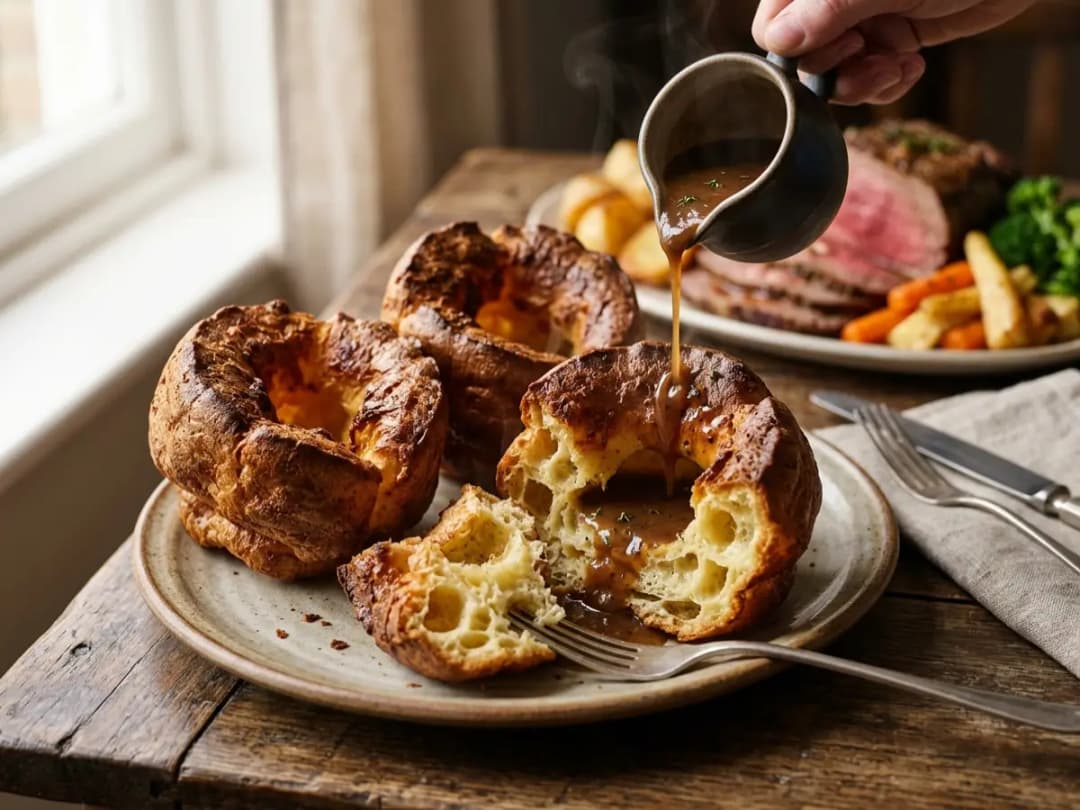
Tall and crisp: The puddings puff up dramatically, with a deep golden, crisp shell.
A hollow center: Perfect for filling with gravy and drippings.
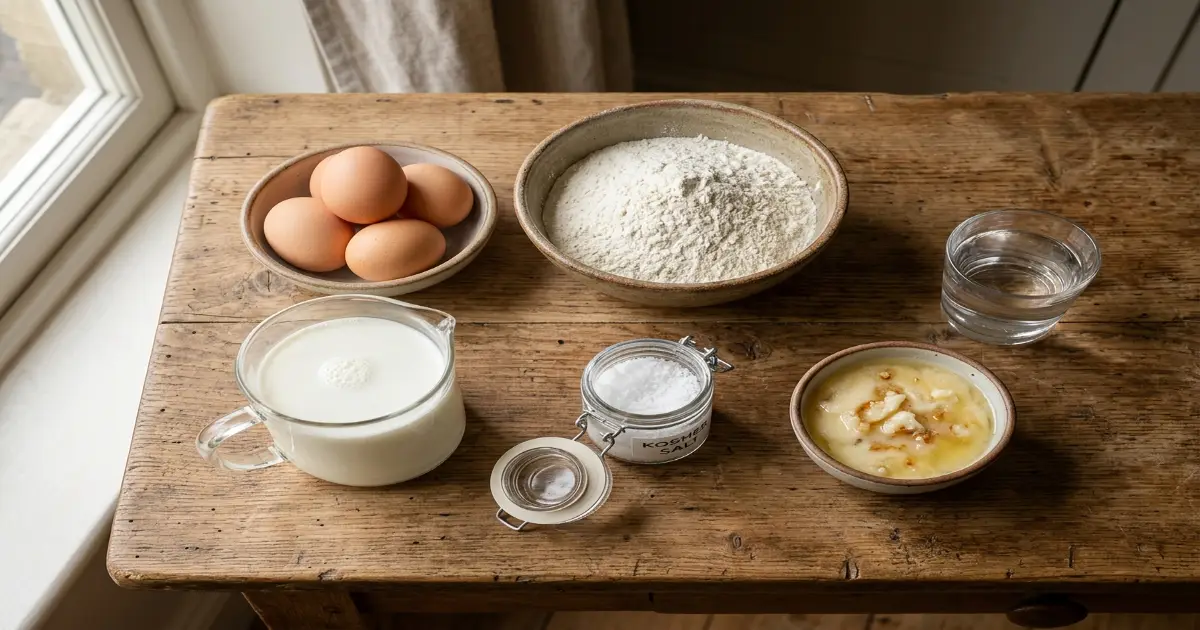
Six simple ingredients: Eggs, flour, milk, water, salt, and fat.
Flexible: Bake them in a popover tin, muffin tin, mini muffin tin, or skillet.
Make-ahead friendly: The batter keeps in the refrigerator for up to 3 days, and baked puddings freeze well.
What Is Yorkshire Pudding?
Yorkshire pudding is a British baked batter made from milk, eggs, and flour, poured into a pan of hot fat and baked until it puffs up. It’s essentially the British version of the American popover. The main differences are the pan and the serving style: popovers are baked in special tins and usually served sweet, while Yorkshire puddings are traditionally served with beef drippings and gravy.
The batter is very thin, almost like cream. In the oven, its moisture turns to steam, which makes the batter puff up to at least four times its original volume. It works on the same principle as the choux dough used for cream puffs. If you like that idea, our cream puffs use a similar steam-powered rise.
Why This Recipe Works
Rested batter. Resting gives you a taller pudding with a more toasty flavor. An overnight rest gives a stretchier interior with large bubbles, ideal for holding gravy.
Smoking-hot fat. Pouring batter into hot fat helps it rise quickly into a crisp shell.
A little water in the milk. It makes the puddings lighter and puffier while keeping them tender.
Whole eggs. They give you tall puddings that stay tender instead of dry.
Ingredient Notes and Substitutions
The Milk and Water
The recipe uses whole milk with a small amount of water. If you’re using skim or low-fat milk, skip the water and use a little more milk instead.
The Fat
Beef drippings give the most flavor and the crispest results. Lard, shortening, and vegetable oil also work. The more solid a fat is at room temperature, the crisper the puddings tend to be, and oil produces softer puddings. If you don’t have roast drippings, clarified butter is an excellent choice.
The Flour and Eggs
Plain all-purpose flour is all you need. Large eggs are used, and whole eggs (not extra yolks) keep the puddings tall without drying them out.
Choose Your Pan
The batter works in almost any pan, so use what you have:
Popover tin: This makes 8 popover-sized puddings. A standard 6-well tin doesn’t divide this amount evenly, so if you want a full 12 popovers, scale the recipe up by 50%.
Muffin tin: Makes 12 muffin-sized puddings. A 12-cup muffin tin is a practical option for this size.
Mini muffin tin: Makes 24 mini puddings.
Skillets: Two 8-inch cast iron skillets or oven-safe nonstick skillets make 2 large puddings, the most traditional style.
Fill muffin or popover wells between one-half and three-quarters full. If using skillets, fill them about one-quarter full.
A large mixing bowl is also useful for preparing and resting the batter before baking.
Tips for the Best Yorkshire Pudding
Rest the batter. Thirty minutes at room temperature is the minimum. For the best results, refrigerate it overnight (or up to 3 days) in an airtight container, then take it out while the oven heats.
Get the fat smoking hot. Preheat it in the oven for about 10 minutes. Hot fat can smoke, so turn on your vent fan.
Mind your batter temperature. Warmer batter gives taller, more hollow puddings, while colder batter gives a more distinct cup shape.
Bake at 450°F without convection. This is hot enough for a strong rise without burning the outside too fast.
Don’t worry about the oven door. Peeking won’t make the puddings collapse.
Serve right away. Yorkshire puddings are light and delicate, and they lose heat quickly, so have everyone seated before you take them out.
How to Tell They’re Done
The puddings should have about quadrupled in volume, be deep brown all over, feel crisp to the touch, and sound hollow when tapped. Smaller puddings take around 15 minutes, while popover- or skillet-sized ones take about 25 minutes.
What to Serve with Yorkshire Pudding
Serve them hot, filled with pan drippings and gravy. Many cooks bring them to the table as a first course before the roast, while others serve them alongside the meat to mop up the drippings. They pair well with a roast beef dinner or a Mississippi pot roast, or with a roasted chicken. For a rich gravy idea, see our tenderloin tips with mushroom gravy. For more hearty meals, browse our dinner recipes.
Make-Ahead, Storage, and Reheating
Batter: Refrigerate it in an airtight container for up to 3 days.
Freezer: Cool the baked puddings completely, then freeze them in a zipper-lock freezer bag for up to 3 months.
Reheating: Reheat them in a hot toaster oven before serving.
Yorkshire Pudding FAQs
What’s the difference between Yorkshire pudding and popovers?
They’re almost the same batter. Popovers are baked in specialized tins and often served sweet, while Yorkshire puddings are usually served with beef drippings and gravy.
Do I have to rest the batter?
Thirty minutes is the minimum, and overnight is best. You can bake immediately if you’re short on time, but the puddings won’t rise as tall or taste as rich.
Can I make the batter ahead?
Yes. Refrigerate it in an airtight container for up to 3 days.
What fat should I use?
Beef drippings are best. Lard, shortening, and vegetable oil also work, and clarified butter is good if you don’t have a roast.
Do I need a popover pan?
No. A muffin tin, mini muffin tin, or oven-safe skillet works too.
Can I open the oven door while they bake?
Yes. Checking on them won’t make them collapse.
Can I freeze Yorkshire puddings?
Yes. Cool them completely, freeze in a zipper-lock freezer bag for up to 3 months, and reheat in a hot toaster oven.
As an Amazon Associate, we earn from qualifying purchases at no additional cost to you.