Why You'll Love This Recipe
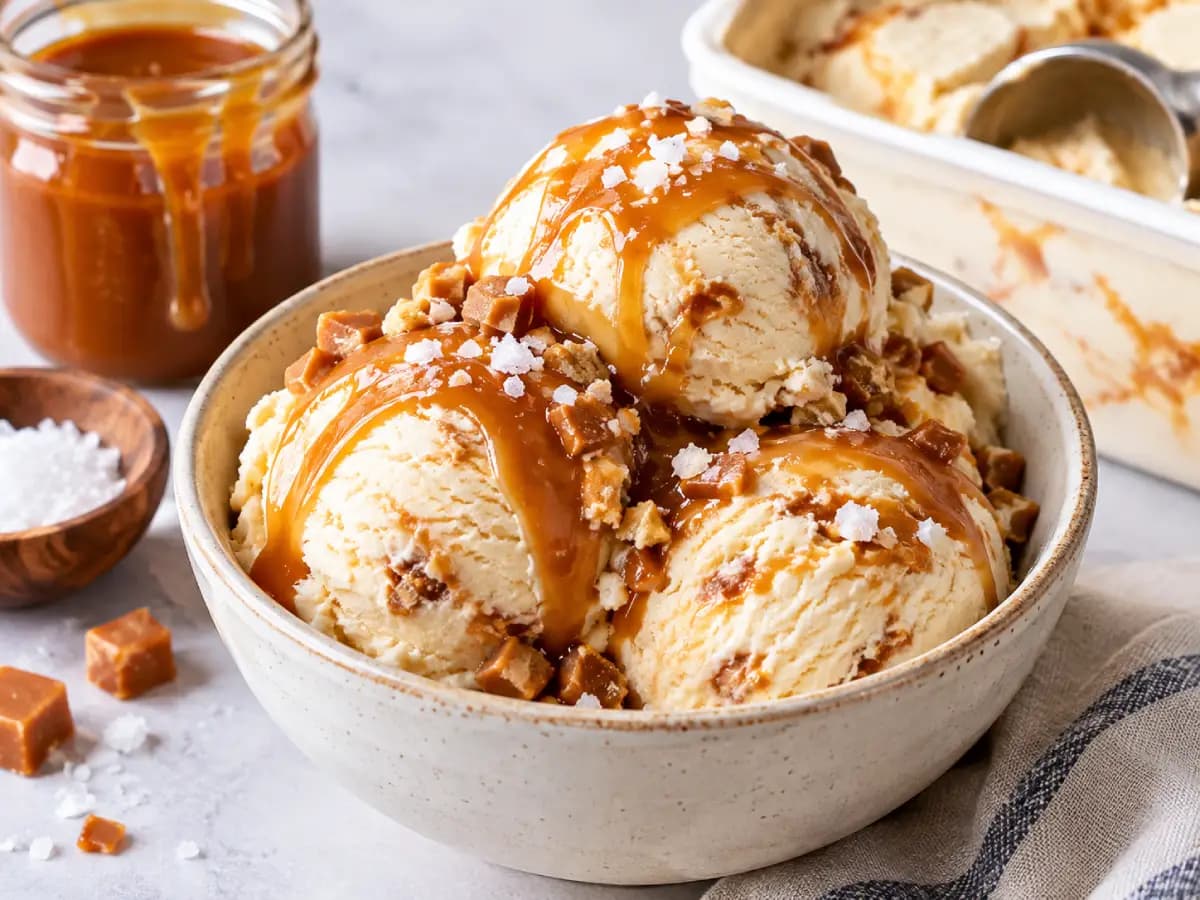
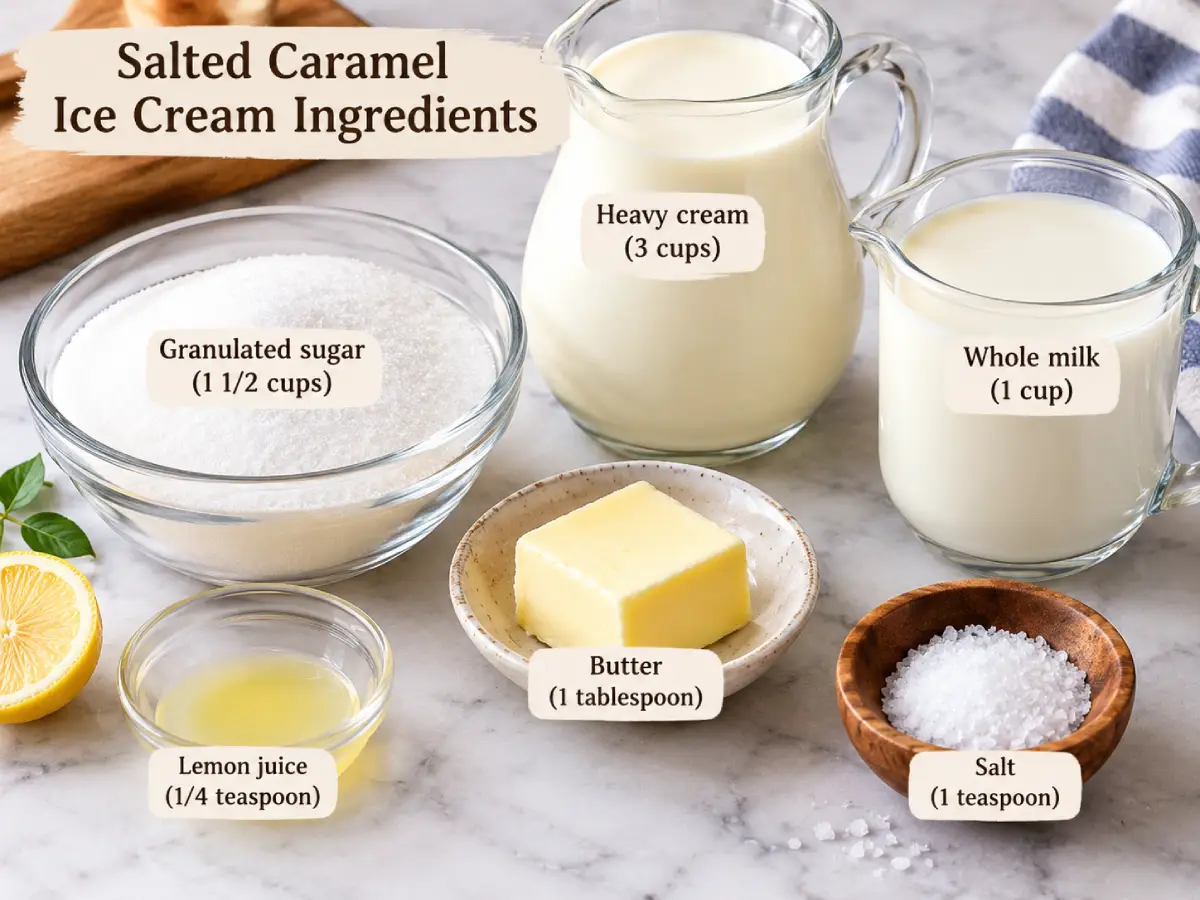
Salted caramel ice cream brings together two complementary flavors: rich, buttery caramel and a hint of salt. Heavy cream and whole milk create a dairy-rich base, while the cooked sugar provides the caramel flavor without the need for eggs.
The recipe is made ahead, chilled, churned, and frozen until firm. That makes it a useful dessert to prepare before a dinner or gathering rather than at the last minute.
What Gives Salted Caramel Its Flavor?
Caramel develops when sugar is heated until it melts and turns amber. Cooking it carefully creates a toasted, buttery flavor, while cooking it too far can make it bitter.
Salt adds contrast to the sweetness. The goal is a balanced caramel flavor, not a dessert that tastes strongly salty or burnt.
Helpful Cooking Tips
Watch the caramel color
Stay close to the stove as the sugar melts. It can darken quickly, so use its color and aroma rather than relying on time alone. Remove it from the heat when it reaches a golden amber shade.
Add the dairy slowly
Hot caramel can bubble vigorously when butter, cream, or milk is added. Reduce the heat and add the dairy gradually while stirring carefully. Keep your hands and face away from the pan.
Be patient if the caramel firms up
Caramel can harden into lumps when it meets cooler dairy. If this happens, keep the pan over low heat and stir gently until the pieces dissolve. Avoid rushing the process with high heat. If the mixture smells burnt, continued heating will not fix the flavor.
Chill before churning
The base should be thoroughly cold before it goes into the ice cream maker. Cover it and refrigerate until chilled throughout. Follow your machine's instructions because churning times vary by model.
Freeze for a scoopable texture
Freshly churned ice cream is often soft. Transfer it to a freezer-safe container and freeze until firm. Let it stand briefly before scooping if it becomes too hard.
Ingredient Notes and Substitutions
Whole milk and heavy cream are important for the intended rich texture. Lower-fat dairy may produce a less creamy result.
Fine sea salt can be used, but measure it carefully. Different salt crystals can pack differently in a measuring spoon, so the saltiness may vary by type.
Changing the proportions of sugar and dairy can affect both flavor and freezing texture. Keep the recipe quantities consistent for the first batch and adjust only after evaluating the result.
Serving Suggestions
Serve the ice cream in chilled bowls or waffle cones. It pairs well with warm brownies, chocolate cake, apple pie, crisp cookies, or toasted nuts.
For a simple sundae, add a small drizzle of caramel sauce and a light pinch of flaky salt. For more sweet treats, browse the ABK Recipes dessert collection.
Storage
Store the finished ice cream in a clean, airtight, freezer-safe container. Press freezer-safe wrap against the surface before closing the lid to help limit ice crystals.
Keep it frozen between servings and use a clean scoop. Allow it to soften briefly at room temperature before serving if needed. Avoid leaving it out for extended periods or refreezing ice cream that has become warm.
Frequently Asked Questions
Is salted caramel ice cream egg-free?
This recipe contains no eggs. Its base is made with caramel and dairy rather than an egg custard.
Why did my caramel become hard after adding the cream?
The cooler dairy can cause melted caramel to firm up temporarily. Keep the pan over low heat and stir gently until the hardened pieces dissolve. Add the dairy gradually to help manage the reaction.
Why does my caramel taste bitter?
The sugar may have cooked too long or become too dark. Watch it carefully and remove it from the heat when it reaches a rich amber color.
Can I prepare the base ahead?
Yes. Cool it safely, cover it, and refrigerate it until thoroughly chilled before churning.
Can I make this without an ice cream maker?
This recipe is designed for an ice cream maker. A no-churn adaptation would require a different method and may produce a different texture.