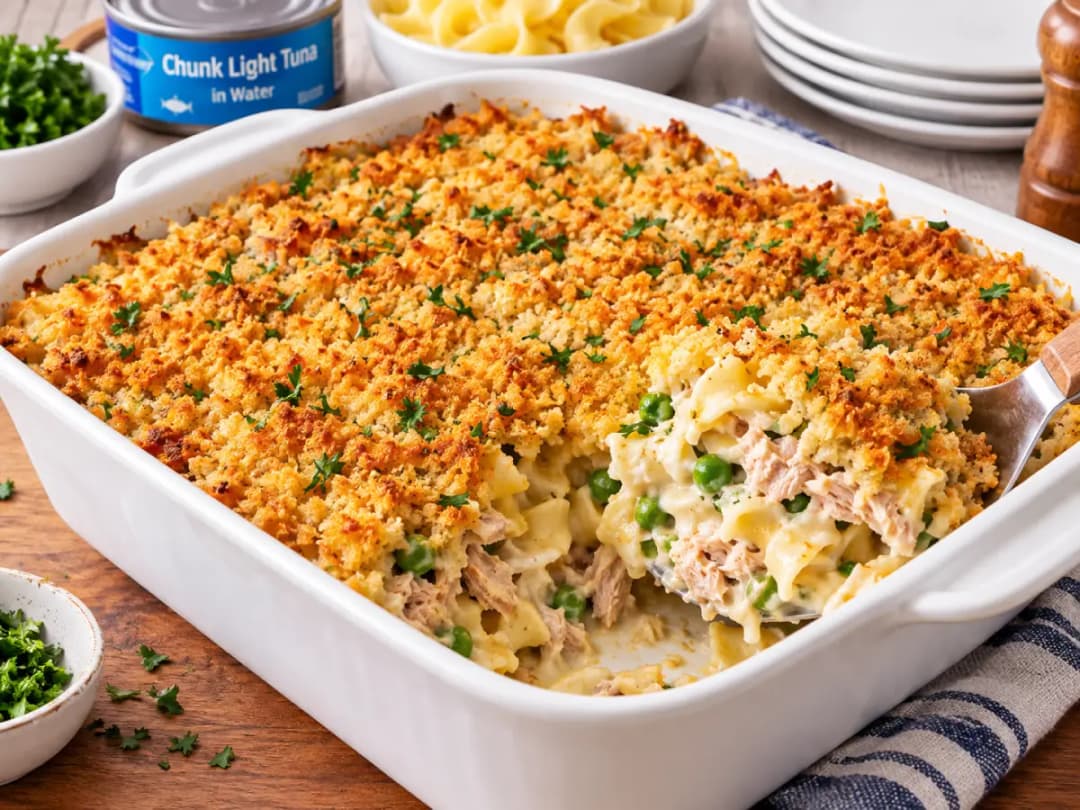
Why You'll Enjoy This Tuna Casserole
Tuna casserole is a comforting baked pasta dish made with everyday ingredients. Egg noodles provide the base, canned tuna adds savory flavor and protein, and condensed cream of mushroom soup brings the ingredients together in a creamy sauce. Green peas, mushrooms, onion, and Cheddar cheese round out the dish.
The crushed potato-chip topping gives the casserole a contrasting crunchy finish. Because the ingredients are easy to find in most American grocery stores, this dish is a useful option when you want a warm, filling dinner without preparing a separate sauce from scratch.
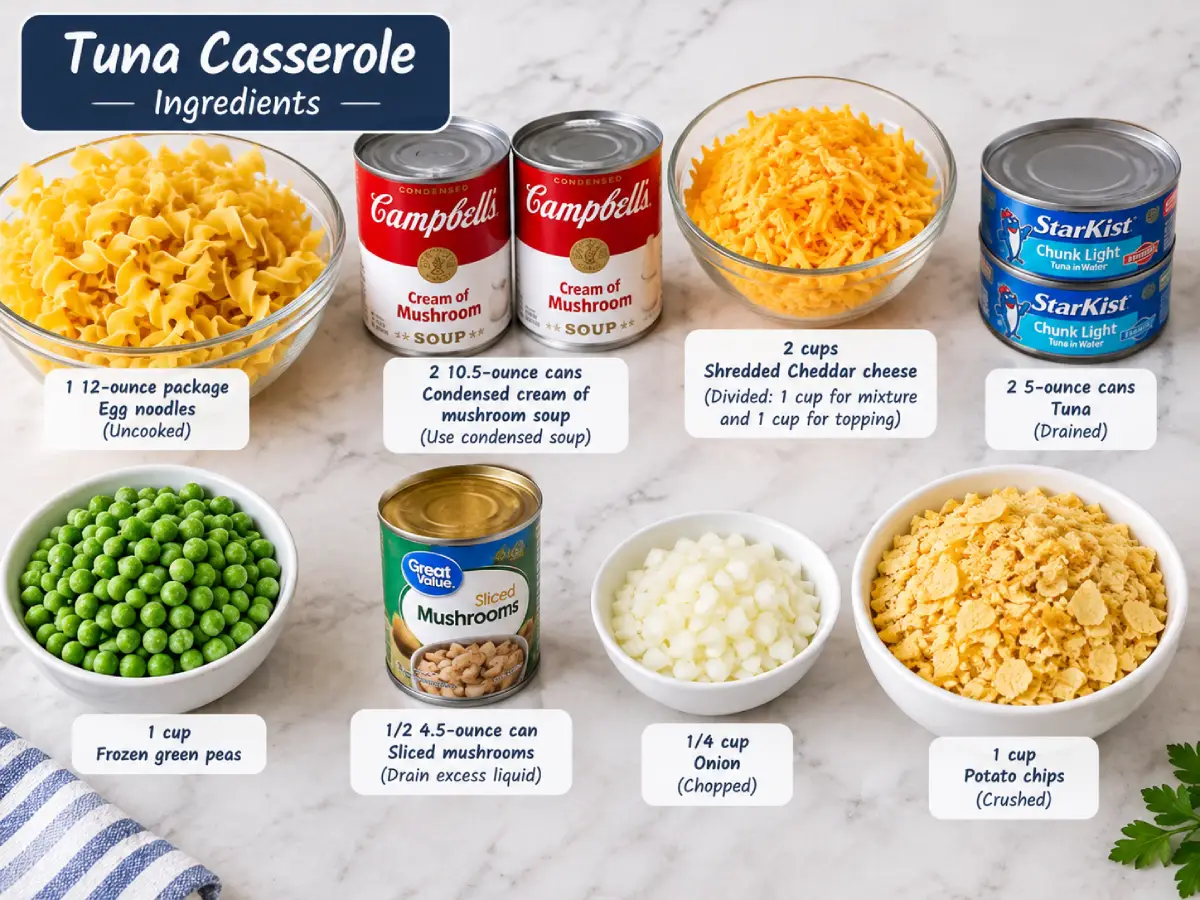
What Makes This Tuna Casserole Creamy?
Condensed cream of mushroom soup coats the noodles and other ingredients, helping the casserole stay moist as it bakes. Cheddar cheese adds a savory, cheesy flavor, while the tuna and vegetables distribute throughout the pasta.
For the best texture, cook the egg noodles until they are tender but still firm to the bite. They will spend additional time in the oven, so avoiding overly soft noodles before baking helps prevent a mushy casserole.
Choosing the Ingredients
Canned Tuna
Drain the canned tuna before mixing it into the casserole. This helps prevent excess liquid from making the finished dish watery. Flake the tuna gently with a fork so it distributes evenly without disappearing into the sauce.
Egg Noodles
Egg noodles are well suited to creamy casseroles because their broad shape holds the sauce. Cook them according to the recipe directions and drain them thoroughly before combining them with the other ingredients.
Cream of Mushroom Soup
Condensed cream of mushroom soup provides the main creamy component. Use the condensed product rather than a ready-to-eat soup unless you have adjusted the recipe accordingly.
Cheddar Cheese
Cheddar contributes flavor and a melted topping. Dividing the cheese between the casserole mixture and the top creates a cheesy interior with a golden finish.
Green Peas, Mushrooms, and Onion
Green peas add color and a little sweetness. Sliced mushrooms complement the mushroom soup, while chopped onion adds savory flavor. Drain any excess liquid from canned mushrooms before adding them.
Potato Chips
Crushed potato chips provide the signature crunchy topping. Crush them into small pieces rather than fine crumbs so the topping retains some texture.
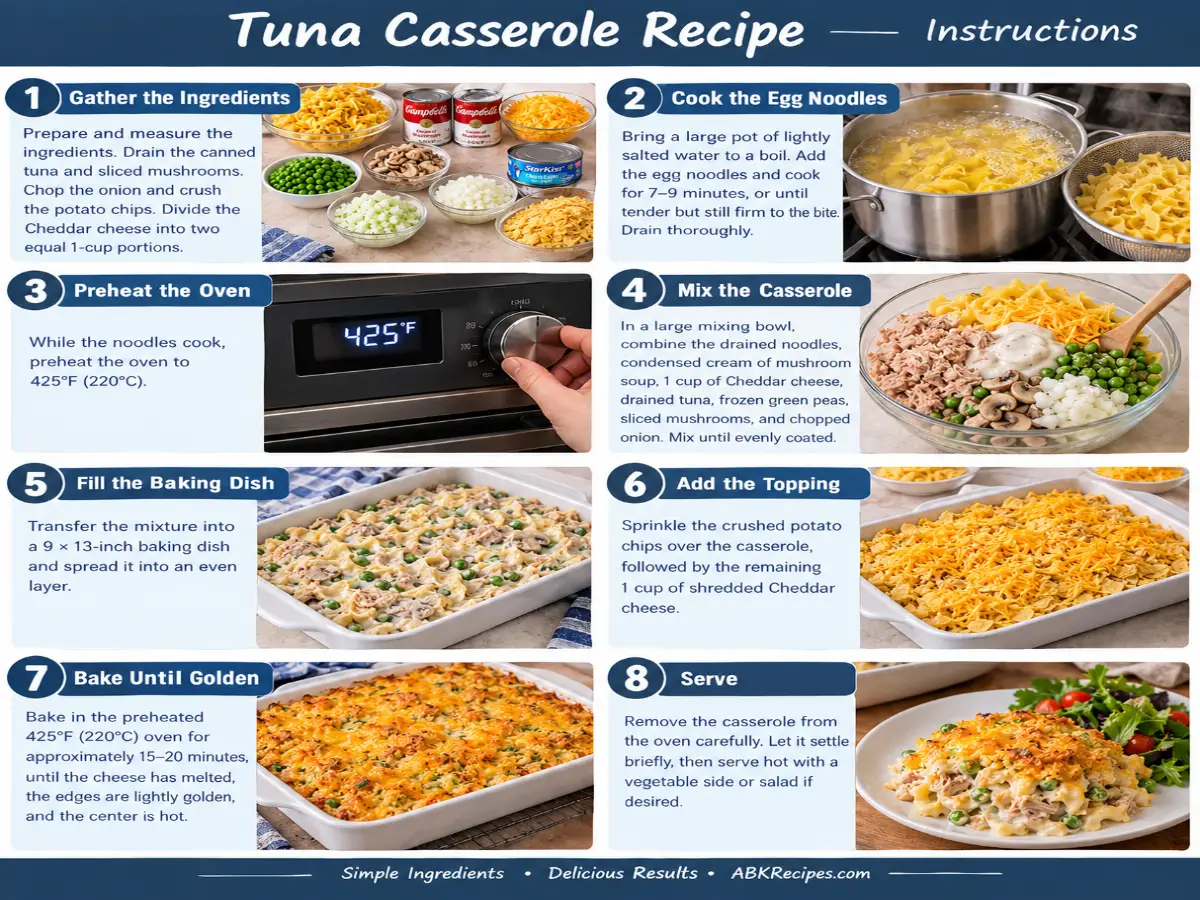
Tips for a Better Tuna Noodle Casserole
Avoid overcooking the noodles. Cook them until tender but still firm, then drain well before mixing.
Drain the tuna thoroughly. Excess liquid can loosen the creamy mixture.
Distribute the ingredients evenly. Mix the tuna, vegetables, cheese, soup, and noodles until the sauce coats the mixture.
Save some cheese for the top. This creates a melted, lightly golden finish.
Watch the final minutes of baking. The casserole is ready when the cheese has melted, the edges are lightly golden, and the center is hot.
Add the topping just before baking. This helps the crushed chips retain more of their texture.
How to Know When the Casserole Is Ready
Look for melted cheese, lightly golden edges, and a hot center. The casserole should be creamy rather than watery, with the noodles holding their shape. Avoid extending the baking time unnecessarily, because prolonged heating can dry the tuna and pasta.
Easy Topping Substitutions
If you don't have potato chips, crushed butter crackers, cornflakes, or French-fried onions are alternatives to the suggested recipe. Each provides a different texture and flavor, so choose the option that suits your preference.
For a vegetable side, serve the casserole with steamed broccoli, green beans, or roasted Brussels sprouts. A simple green salad also provides a fresh contrast to the creamy pasta.
Can You Make Tuna Casserole Ahead of Time?
Yes. You can assemble the casserole a day ahead, cover the baking dish, and refrigerate it before baking. For food safety, keep it refrigerated and avoid leaving the prepared dish at room temperature for extended periods.
A chilled casserole may need more time in the oven than one assembled immediately before baking. Check that the center is thoroughly hot before serving rather than relying only on the original baking time.
How to Store Leftovers
Transfer leftover tuna casserole to a shallow, airtight container and refrigerate it promptly.
Reheat individual portions in the microwave or warm larger portions in the oven until heated through. Covering the casserole during reheating can help reduce moisture loss; uncover it toward the end if you want to restore some texture to the top.
Can You Freeze Tuna Casserole?
For long-term storage, we recommend cooling the casserole, wrapping it securely, and freezing it for up to three months. Thaw it in the refrigerator overnight before reheating.
The potato-chip topping may lose some of its crunch after refrigeration or freezing. If texture is important, prepare a fresh crunchy topping when serving reheated portions.
Frequently Asked Questions
What temperature should I use for tuna casserole?
Bake at 425°F (220°C) and refer to the recipe instructions for the complete baking process.
Why is my tuna casserole watery?
Excess liquid from tuna, mushrooms, or incompletely drained noodles can make the casserole loose. Drain these ingredients thoroughly and avoid adding unmeasured liquid to the mixture.
Can I use another topping instead of potato chips?
Yes. The original recipe suggests using crushed butter crackers, cornflakes, or French-fried onions as alternatives.
What goes well with tuna casserole?
Steamed broccoli, green beans, roasted Brussels sprouts, or a simple salad pair well with this hearty dish.
How long does tuna casserole keep in the refrigerator?
It is recommended to store leftovers in a shallow, airtight container for up to four days. Be sure to refrigerate them promptly and reheat them thoroughly.
A Comforting Dinner for Any Night
With tender noodles, creamy mushroom sauce, tuna, vegetables, melted Cheddar, and a crunchy topping, tuna casserole is a straightforward way to make a filling baked dinner from familiar ingredients. Serve it hot with a fresh vegetable side, and store leftovers promptly for another meal.